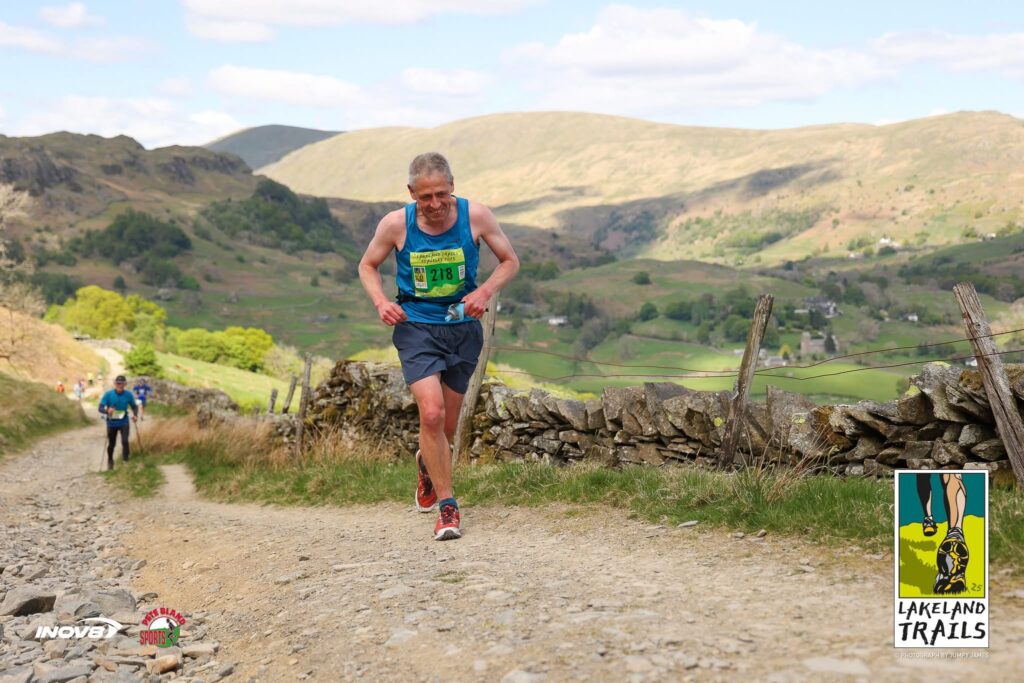
There are mornings here at Rydal when the mist hangs low over Nab Scar, and the air carries that quiet expectancy before the sun has quite found its courage. I lace my shoes and set out toward the fells — not to conquer them, but to be with them. To move among them as one might move through a psalm: with reverence, with listening, with breath.
Running uphill feels like prayer in its petitioning form — the steady, honest labour of heart and body reaching toward something unseen. But it is the downhill where I most often encounter the still centre of things.
To descend a steep, stony fell requires a strange kind of surrender. If you overthink each step, you’ll falter. If you stiffen, you’ll fall. The only safe way down is to trust: to soften your knees, to stay open, to let gravity become a companion rather than an enemy. Your focus sharpens, but your effort eases. You are utterly alert, but no longer in control. Something else — call it balance, grace, or God — carries you.
This is how prayer sometimes comes. Not through striving or perfect form, but through release. We stop managing our words, our feelings, even our understanding. And in that relinquishment, we discover that we are being prayed through. That something deeper than our will — the Spirit itself — runs the course for us.
On the descent, I often catch a glimpse of Rydal Water flashing below, a mirror of light that seems to widen with every step. The rhythm of footsteps becomes a kind of chant. The body learns what the soul already knows: that to fall safely is to trust the ground beneath you; that to run freely is to remember you are held.
So whether your path today rises or falls, whether you are breathless in the climb or surrendered in the descent, may you know this: prayer is not a technique but a belonging. We do not make our way to God — we are already within the motion of His love.
And sometimes, just sometimes, it takes a rocky Lakeland trail to remind us.